Who is liable when a commercial vehicle rear-ends you in Georgia?
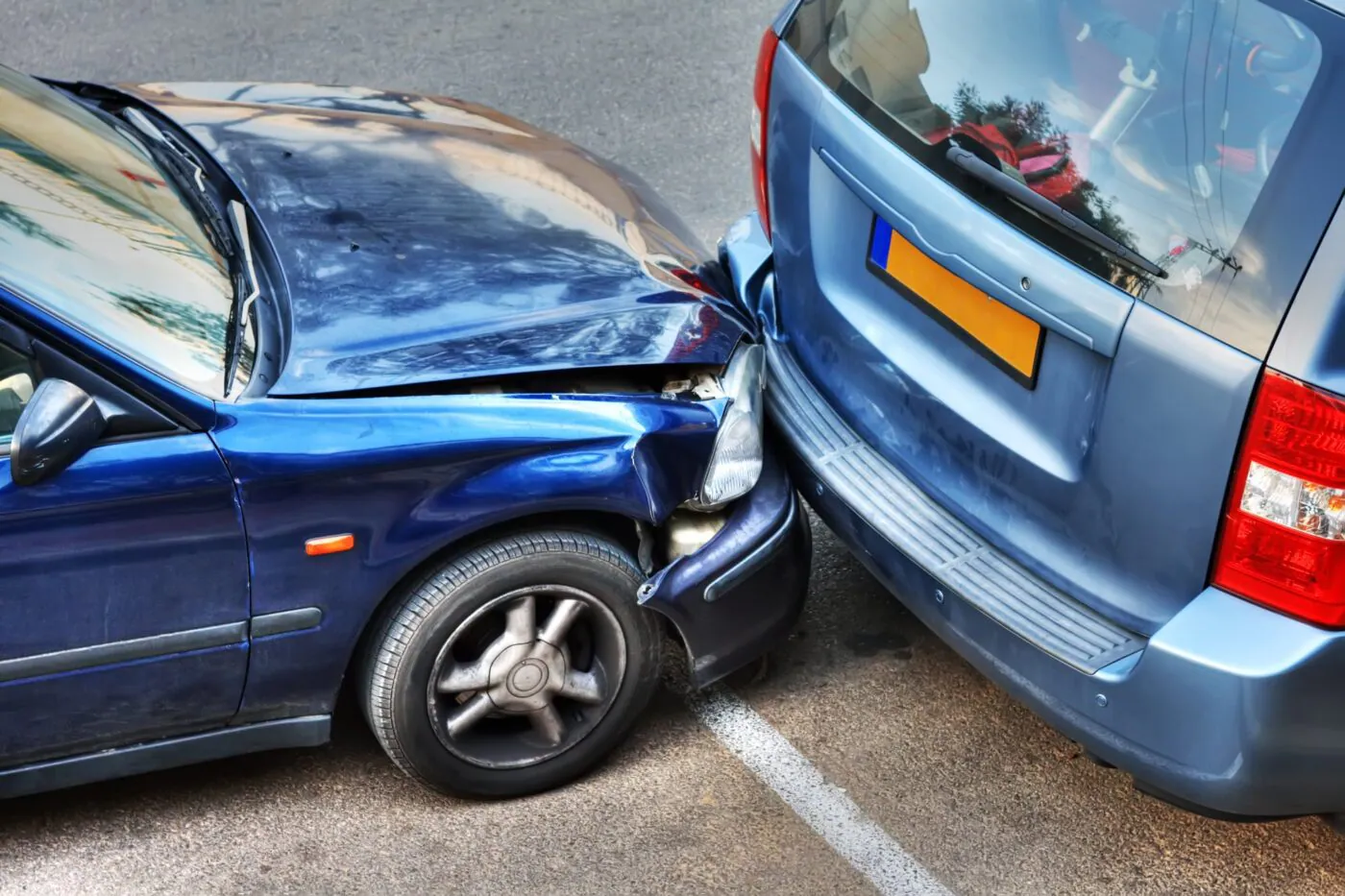
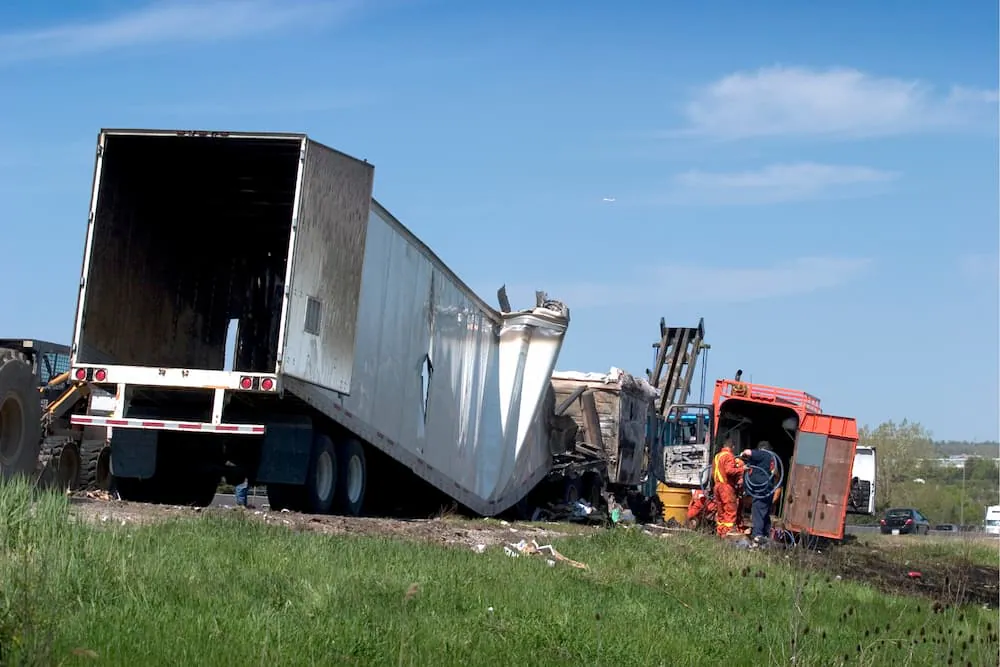
When a truck or other commercial vehicle rear-ends you in Georgia, the driver may be liable, and so may the company that employs the driver or maintains the vehicle. Fault turns on evidence such as the police report, video and the truck's event data recorder. The Scott Pryor Law Group investigates every party that may share the blame.
Key takeaways
- The driver of a commercial vehicle, the company behind it, or both may be liable for a rear-end crash.
- Common causes include fatigue, misjudged stopping distance, and failed brakes or tires.
- The vehicle in back is not always found at fault. The evidence decides it.
- A truck's event data recorder can show how it was driven in the moments before the crash.
- When more than one party shares fault, you may have more than one insurance claim.
What causes rear-end collisions with commercial vehicles?
Rear-end crashes with commercial vehicles in Georgia usually come down to driver error or mechanical failure. A tired or inexperienced driver may misjudge the room a heavy truck needs to stop, and failed brakes or a tire blowout can take control away. The Scott Pryor Law Group investigates both the driver and the vehicle after a rear-end crash.
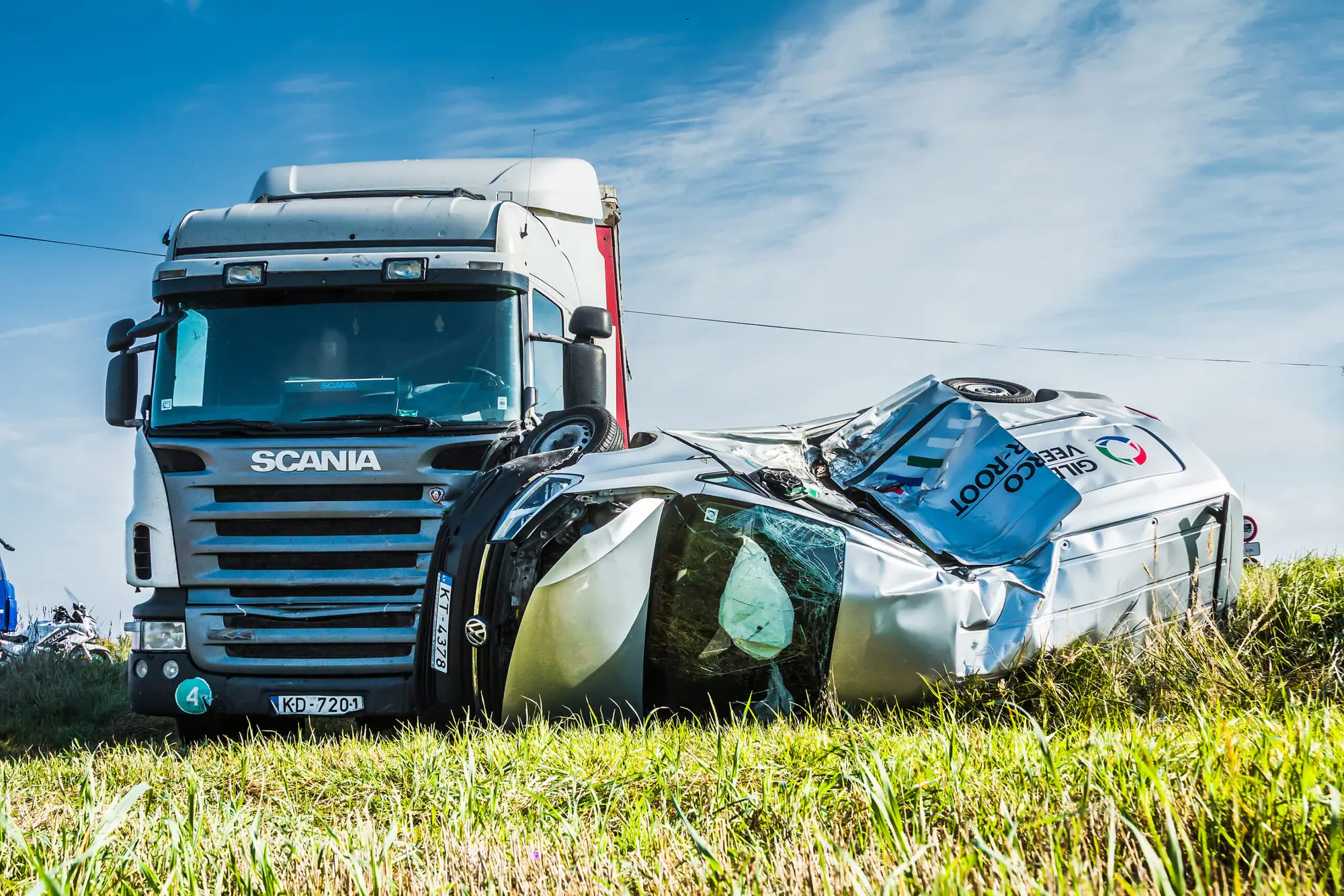
Commercial vehicles are larger and much heavier than passenger cars, so a rear-end crash with one can cause serious or fatal injuries. The car in front takes the force, and the people in it can suffer several injuries at once. The usual causes:
- Misjudged stopping distance. An inexperienced driver may not leave the distance a loaded truck needs to brake and come to a full stop.
- Fatigue. A tired driver can have a lapse in attention and miss that the car ahead has slowed or stopped. Our post on truck driver fatigue covers the hours rules.
- Distraction and speed. Phone use and speeding cut the time a driver has to react.
- Mechanical failure. A tire blowout or a defective braking system can make a truck lose control or fail to stop.
Each cause leads to a different question about who is responsible. A misjudged stop raises how the driver was trained. Failed brakes raise how the truck was maintained, or whether the part itself was defective. A tired driver raises how the company scheduled the trip.
How do trucking safety rules apply to a rear-end crash?
Federal safety rules limit a truck driver’s hours and require rest breaks and vehicle maintenance, and Georgia has its own motor carrier law. In a Georgia rear-end crash, a broken rule can be evidence of negligence against the driver, the company or both. The Scott Pryor Law Group checks the driver’s hours and the truck’s maintenance records early.
Under Georgia law: Trucking companies must follow strict safety regulations, including limits on driver hours and maintenance requirements. O.C.G.A. § 40-1-8
In a rear-end crash, the rules connect to the cause:
- A driver past the hours limits may be too tired to notice traffic slowing ahead.
- A truck that missed inspections or brake repairs may not stop in time.
- A driver without enough training may misjudge how long a loaded truck takes to stop.
When the records show one of these, the violation helps explain why the truck hit you. Insurers often argue that a violation had nothing to do with the crash, so we connect the two with the truck’s data, the maintenance records and, when needed, crash reconstruction experts.
Our post on federal and Georgia trucking rules explains which rules apply to which vehicles.
Who is at fault in a rear-end collision with a commercial vehicle?
The vehicle in back is not always found at fault in a Georgia rear-end crash, so fault with a commercial vehicle comes down to the evidence. The Scott Pryor Law Group gathers police reports, photos, video, witness accounts and the truck’s event data recorder to show what happened before, during and after the collision.
Following distance is part of that evidence. Georgia laws require vehicles to keep a safe distance from one another. A loaded truck needs more room to stop than a car, so a truck that hits you from behind may not have left enough.
Georgia law on fault: Georgia follows an at-fault system: whoever caused the crash is liable. O.C.G.A. § 51-1-6
The evidence that matters:
- The police report. The officer’s record of the scene and the vehicles.
- Photos and video. Of the vehicles, the road and the damage, from you, from witnesses or from nearby cameras.
- Witness statements. What other drivers and bystanders saw.
- The event data recorder (EDR). Semi-trucks and some other commercial vehicles carry one. It works much like an airplane’s black box and records how the truck was being driven in the moments before the crash.
In a rear-end case, the event data recorder can show when the truck driver started braking and how fast the truck was going. A truck that never slowed, or slowed late, points to a driver who was tired, distracted or too close. That data can be overwritten, so we demand that the trucking company preserve it as soon as you retain us.
Expect the trucking company’s insurer to look for a way to shift blame onto you. Georgia’s comparative negligence rule: If you are less than 50% at fault, you can still recover damages, reduced by your percentage of fault. O.C.G.A. § 51-12-33 The share of fault assigned to you should match what the evidence shows.
What happens if more than one party caused the rear-end crash?
More than one party can share the blame for a rear-end crash with a commercial vehicle in Georgia. A tired driver and a trucking company that skipped brake repairs can both be at fault, and each may have its own insurer. The Scott Pryor Law Group identifies every responsible party, and every claim, before it negotiates.
Picture a loaded truck that rear-ends a car on the highway. The people in the car survive with several injuries, and the car is destroyed. The truck driver had been on the road too long and fell asleep at the wheel. When the driver woke and hit the brakes, they failed, because the company had put off maintenance and repairs.
Both may be at fault. The driver was negligent, and the company contributed by cutting corners on the truck. Each can be part of the claim, and each may answer through a different policy. That can leave you with more than one insurance claim for one crash, each with its own adjuster. We deal with every one of them, so you are not answering questions about fault on your own, and we keep each claim moving.
Other parties can enter the picture too, such as a repair shop that serviced the brakes or the maker of a defective part. Our post on suing the truck driver or the trucking company explains who can be named.
You can see our trucking results, a trucking rear-end collision among them, on our case results page. Every case is different, and no past result tells you what yours is worth.
The deadline to file: Victims generally have two years to file a personal injury lawsuit. O.C.G.A. § 9-3-33 Our Georgia truck accident lawyer page explains why the practical deadline in a truck case comes much sooner, and what to do after a crash. Schedule a free consultation. Phones answered 24/7.
Hurt in a truck or commercial vehicle crash in Georgia? The consultation is free. You don't pay unless we win your case.
Free Case Review or call (404) 474-7122