

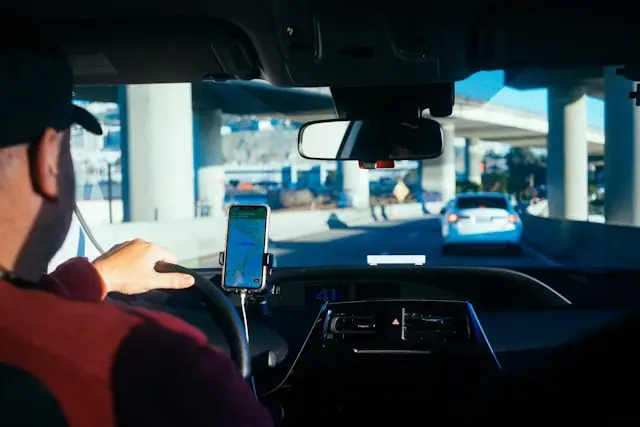
Uber and Lyft accidents
Georgia Rideshare Accident Lawyer
The justice you deserve. The WIN we're working for.
The Scott Pryor Law Group represents passengers, other drivers, pedestrians and cyclists hurt in Uber and Lyft crashes across Georgia. We find out which policies apply, secure the trip records and crash evidence, and handle the insurers while you recover. You don't pay unless we win your case.
Free consultation|No fee unless we win|Phones answered 24/7
Free Case Evaluation
Our promise to you.
No out-of-pocket fees
You never pay us anything up front. You don't pay unless we win your case.
Phones answered 24/7
Call day or night. The consultation is free.
Your own legal team
Each client has a dedicated attorney and case manager to answer questions and give updates.
Prepared to win
We prepare every case as if it will go to trial. Insurers take that seriously.
Table of contents
- What should I do after an Uber or Lyft accident in Georgia?
- Who pays after an Uber or Lyft accident in Georgia?
- Can I sue Uber or Lyft after a crash?
- How do I choose a rideshare accident lawyer in Georgia?
- How do I start a rideshare accident claim, and how fast can you begin?
- What compensation can I get after a rideshare accident?
- How long do I have to file a rideshare accident claim in Georgia?
What should I do after an Uber or Lyft accident in Georgia?
Call 911 and get checked.
Report the crash and ask for medical help. Get examined even if you feel fine. Adrenaline can hide an injury, and an early medical record links your injuries to the crash.
Get the rideshare details.
Write down the driver's name, the license plate, and both the driver's personal insurance and the rideshare company's insurance. If you were the passenger, screenshot the trip in the app.
Document the scene.
If you can do it safely, photograph the vehicles, the road and your injuries. Get names and contact details from witnesses.
Report the crash to Uber or Lyft, with facts only.
Passengers can report in the app. Other drivers, pedestrians and cyclists can use each company's online crash report form. Do not guess about fault or your injuries.
Hold off on recorded statements.
Do not give a recorded statement to any insurer, including the rideshare company's, before you talk to a lawyer. Keep a copy of every email, text and letter.
Call a rideshare accident lawyer.
Electronic trip data shows what the driver was doing in the app, and acting quickly helps preserve it. The consultation is free. Phones answered 24/7.
Who pays after an Uber or Lyft accident in Georgia?
In a Georgia rideshare accident, who pays depends on who caused the crash and what the driver was doing in the app at that moment. If the Uber or Lyft driver was at fault, the app status decides whether the company's coverage applies and how much. The Scott Pryor Law Group finds every policy that applies.
Georgia follows an at-fault system: whoever caused the crash is liable. O.C.G.A. § 51-1-6 So the first question is who caused the crash. If another driver hit the rideshare car, that driver and their insurer are responsible, as in any car accident. If the rideshare driver caused it, the next question is what the driver was doing in the app.
Drivers sometimes switch the app off between trips, and insurers sometimes dispute what the driver was doing, so we request the app records that show the driver's status. We also check every policy that could pay, including your own. Coverage follows the app like this:
- App off. The driver is on personal time. If the driver was fully offline, Uber and Lyft do not provide any coverage for your injuries.
- Logged in and waiting for a ride request. Uber and Lyft provide limited coverage when their drivers are logged in but haven't accepted a ride, up to $50,000 per person in bodily injury coverage, $100,000 in total bodily injury coverage per accident, and $25,000 in property damage coverage. If the driver's personal insurance doesn't cover the accident, the rideshare company's insurance may step in.
- On the way to a pickup, or carrying a passenger. The company's larger policy applies, along with uninsured and underinsured motorist coverage. Uber and Lyft must carry $1 million in liability coverage for accidents while a driver is actively transporting a passenger. O.C.G.A. § 33-1-24
Can I sue Uber or Lyft after a crash?
Sometimes. Uber and Lyft classify their drivers as independent contractors, so in a Georgia rideshare accident the companies are rarely held directly responsible for a driver's mistakes. The Scott Pryor Law Group looks for the exceptions, such as a company that failed to screen or monitor a driver, and for every other party who shares fault.
Even when the company is not liable itself, its insurance can still pay for a crash its driver caused. Beyond the company, responsibility depends on how the crash happened, and fault can be split among several parties. Their insurers often point at each other to limit what they pay.
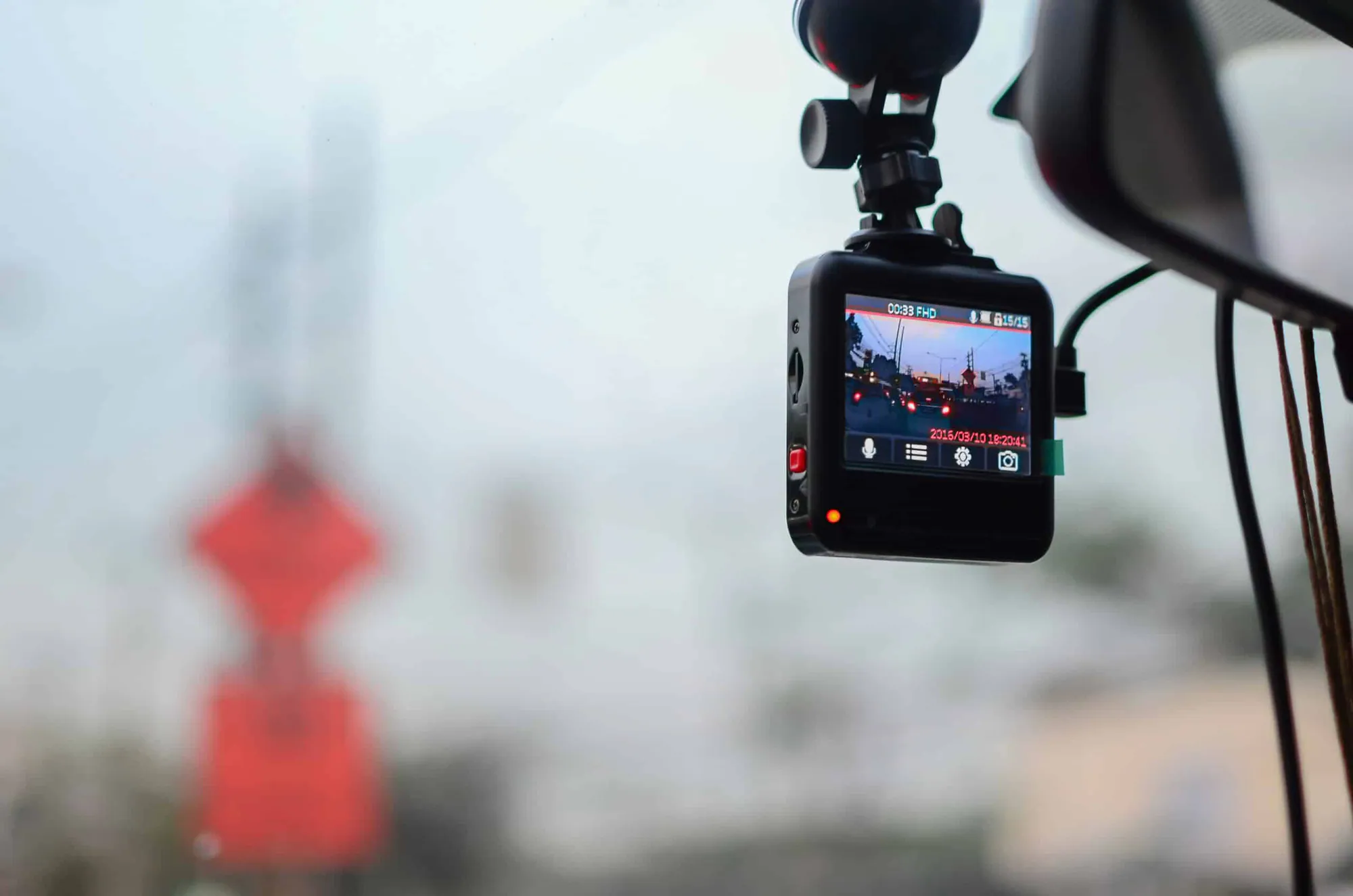
We sort that out with evidence: the police report, traffic and dashboard camera video, witness statements, phone records when distraction is likely, and the app data that shows the stage of the trip. When the facts are disputed, we bring in crash reconstruction experts. Responsible parties can include:
- The Uber or Lyft driver, if the driver was distracted, speeding, tired, impaired or careless.
- Another driver who caused the crash or helped cause it.
- Uber or Lyft, in rare cases, such as a failure to screen or monitor a driver.
- Someone driving on another person's rideshare account who was never approved to drive.
- The maker of a vehicle or part that failed.
- A government agency, when poor road conditions contributed to the crash.
While I'm driven and relentless in pursuing justice, I pride myself on being personable, honest, hardworking, and loyal.
Our 6-Step Litigation Process
File the lawsuit
Summons and complaint, service of process, the defendant's answer.
Initial client meeting
Within 60 days of filing suit. We go over what has to be proven and how your treatment supports it.
Discovery
About 6 to 12 months. Interrogatories, requests to produce, medical records, depositions, experts and witness lists. We attempt settlement.
Mediation
About 1 to 2 months after discovery.
Trial preparation
6 months to 2 years after the lawsuit is filed.
Trial
If the case has not settled, we try it.
A case can settle at any time during this process. Very few cases go all the way to trial.

Rideshare accident results
Here is one of our rideshare accident results. Every case is different, and no past result tells you what yours is worth.







Attorneys who handle Georgia rideshare accident cases
Scott Pryor founded The Scott Pryor Law Group after serving in the U.S. Marine Corps. Litigation attorneys Andrew and Zane Bradford work with him, and both are admitted to federal court in Georgia.
Swipe →

Scott Pryor
- U.S. Marine Corps veteran
- Litigator's Award: Top 1% of Trial Lawyers in the Nation
- Georgia Trial Lawyers Association (Champion Level)
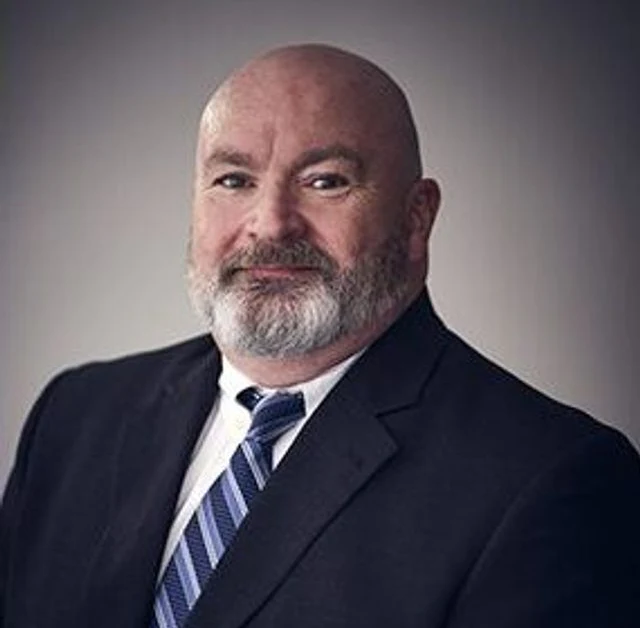
Andrew
- AV Preeminent rating, Martindale-Hubbell
- Licensed in all state courts of Georgia and Tennessee
- Admitted to the U.S. Courts of Appeals for the Eleventh and Fourth Circuits

Zane Bradford
- U.S. Marine Corps Reserve veteran, first Gulf War
- Admitted to the Superior and Supreme Courts of Georgia
- Admitted to the U.S. District Court, Northern District of Georgia
What clients say
3,200+ Google Reviews
Swipe →
After my car wreck, they took over and made things easy. So glad I trusted them.Co Co
Helped me settle fast after a semi-truck accident. Very professional team.Justin Wilson
They gave great advice after my motorcycle injury. Straight to the point and honest.Josiah Jenkins
Great experience from start to finish. They made a tough time much easier.Roman Lytle
Scott Pryor Law Group handled everything smoothly. Zero stress on my end.Arontez
The team at Scott Pryor Law is professional, responsive, and gets results. Highly recommend!Zay J
Scott Pryor Law Group is top-notch. They truly care about their clients and know how to win cases.Cameron Colley
Great legal team-organized, knowledgeable, and compassionate.DNaijha James
Jacqueline handled my car accident case and was very personable and understanding. I appreciated the time she took to talk me through the process and keep me updated.Jami G
Scott Pryor Law took care of my car accident. I worked with Jacqueline and she was really amazing and got me a very good settlement. I highly recommend. Thanks Scott Pryor Law.Adebimpe Esther
Jacqueline was so helpful during the process after my car crash! She was so willing to work with me and got me a great settlement!Kat Werner
Jacqueline And the whole team have been very supportive and helped me feel better throughout everything with the wreck 10 out of 10 placeDustin Hall
Questions
Frequently asked questions
How do I report an Uber or Lyft accident if I don't have the app?
Use the company's online crash report form. Uber and Lyft both take reports from people who were not riders. Give your contact details, the date, time and place, and anything that identifies the car or driver, such as the plate. Stick to what you saw, do not guess about fault, and save a copy of what you submit.
What if another driver hit the Uber or Lyft I was riding in?
Then that driver and their insurer are responsible, as in any car accident. If that driver had no insurance or too little, the rideshare policy's uninsured and underinsured motorist coverage may help while a trip is under way, and your own policy may too. We check every policy that could pay.
Does it matter whether it was Uber or Lyft?
Less than most people expect. Both companies tie coverage to the driver's app status in the same way. Their claim steps differ a little: Uber takes crash reports through its app or website, and Lyft starts with an online accident report and assigns a claims team. Either way, the adjuster's job is to protect the insurance company.
Related articles
 Car Accidents
 Steps to take if you've been in a car wreck
What to do and what not to do right after a car wreck, from The Scott Pryor Law Group. A short checklist to keep on hand. Car Accidents
 How much is a car accident case worth in Georgia?
What decides the value of a Georgia car accident case: injuries, medical bills, lost wages, insurance limits and fault. And why first offers run low. Car Accidents
 How do you prove the other driver was distracted?
How to prove the other driver was distracted in a Georgia car accident: phone records, witnesses, video and admissions, and what shared fault means. Car Accidents
 What happens if someone else crashes my car in Georgia?
When someone else crashes your car in Georgia, permission, both drivers' policies and fault decide who pays. What to do next, and when to call a lawyer.We take the financial risk
You don't pay unless we win your case.
No out-of-pocket fees. The consultation is free. Phones answered 24/7.
Get a free consultationOur offices
Phones answered 24 hours a day, 7 days a week. Call (404) 474-7122 for either office.
Peachtree Corners (headquarters)
6185 Crooked Creek Rd NW Ste. HPeachtree Corners, GA 30092