Can I sue Amazon if a delivery driver hits me in Georgia?
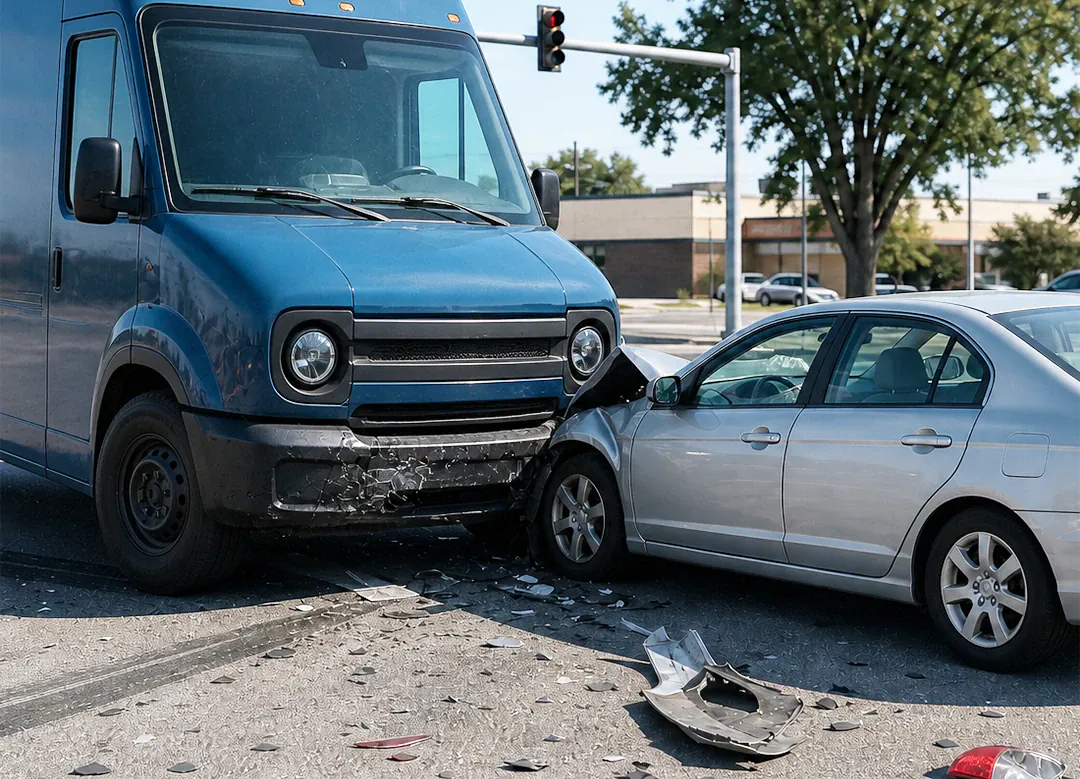
Sometimes. After an Amazon delivery truck accident in Georgia, a claim can reach the driver, the delivery company that hired the driver and, depending on how much control Amazon had over the route, schedule and van, Amazon itself. The Scott Pryor Law Group investigates each one, because the driver's role also changes which insurance policy pays.
Key takeaways
- The driver, the delivery company and sometimes Amazon can each be part of the claim.
- Most Amazon packages move through Delivery Service Partners, separate companies that hire and manage the drivers.
- An Amazon Flex driver uses a personal car, which raises questions about which policy covers the crash.
- Routing and delivery data does not stay available forever. Ask a lawyer to request it early.
- Talk to a lawyer before you give a statement to any insurer.
Who pays when an Amazon delivery driver hits you in Georgia?
More than one party can pay after an Amazon delivery crash in Georgia. The driver is responsible if they caused the crash. The delivery company that employs the driver is often part of the claim too, and depending on how much control Amazon had, Amazon itself can be. The Scott Pryor Law Group investigates all three.
Amazon vans and box trucks are on Georgia roads in numbers few people would have guessed a few years ago. More vans mean more crashes. An Amazon vehicle crash works differently from an ordinary car accident claim, because the company behind the van and the company that hired the driver are often two separate companies.
That one fact changes who pays. Here is who a claim can reach:
| Party | When it can be part of the claim |
|---|---|
| The driver | When the driver’s actions caused the crash |
| The delivery company | Often, as the company that employs the driver |
| Amazon | When Amazon controlled enough of the driver’s work: the route, the schedule, the van |
The starting point is Georgia’s at-fault rule: Georgia follows an at-fault system: whoever caused the crash is liable. O.C.G.A. § 51-1-6
Sorting out which of these applies means digging past the insurance company’s version of events long before any settlement talk starts. We start with the crash itself, then follow the paperwork back to every company that had a hand in it.
Can you sue Amazon directly, or only the driver?
Sometimes you can sue Amazon directly. It depends on how the driver was classified and how much control Amazon had over the driver’s work. Most Amazon packages move through Delivery Service Partners, separate companies that hire and manage the drivers. The Scott Pryor Law Group looks behind that arrangement in each Georgia Amazon delivery accident case.
A Delivery Service Partner, or DSP, is an independent contractor company. The DSP hires and manages the driver. That arrangement puts real distance between Amazon and the person driving the van.
The arrangement on paper is where the question starts. What matters is who controlled the job:
- The routes
- The schedule
- The delivery quotas
- The branding on the van
When Amazon’s control runs deep enough, a claim against Amazon itself can hold up. Showing that takes dispatch records and contracts. We start gathering them before the first offer comes in.
Who the claim names matters for a practical reason: each company brings its own insurance. Leave a company out, and its coverage can be left out with it.
Does it matter if an Amazon Flex driver or a DSP driver hit you?
Yes. After a Georgia Amazon delivery crash, the type of driver changes which insurance policy pays. An Amazon Flex driver uses a personal car. A DSP driver drives a branded van or box truck for a delivery company. The Scott Pryor Law Group finds out which one hit you, because each comes with different coverage.
Amazon Flex drivers sign up for delivery blocks through an app and drive their own cars. That raises a coverage question. Personal auto policies commonly exclude commercial or delivery-for-hire use, the same gap that has shown up in rideshare accident cases for years. Amazon backs part of that gap with its own contingent liability coverage, but only once a Flex driver is actively working a delivery block.
Whether the driver had started that block at the moment of the crash is the kind of dispute that leaves two insurers pointing at each other. Someone has to sort out which one pays.
DSP drivers drive branded vans or box trucks for a delivery company. That company is contractually required to carry commercial auto insurance to operate in Amazon’s network.
Who you are dealing with, and which policy is on the hook, depends on which driver hit you. We sort that out so the right insurer answers for the crash.
Why do Amazon delivery truck accidents happen?
Amazon delivery crashes in Georgia can trace back to schedules built around speed. Routes are tracked, stops are timed, and a driver who falls behind can feel pressure to make up time. The Scott Pryor Law Group looks for that pressure in each case, because it can point to the company as well as the driver.
That pressure shows up as the kind of driving that causes wrecks:
- Rolling stops
- Hard turns into driveways
- A glance at the routing app instead of the road ahead
No police report lists “delivery quota” as the cause of a crash. It can still be the real reason behind one. Showing it takes the company’s routing and delivery data for the day of the crash: the route, the stops and how each one was timed.
That data does not stay available forever. The sooner a lawyer requests it, the better the odds of getting the full picture.
What should you collect after a crash with an Amazon delivery van?
After a crash with an Amazon delivery van in Georgia, get the driver’s name, the van’s license plate and any badge or ID number the driver carries, and photograph the vehicles, the damage, the road and the intersection. The Scott Pryor Law Group uses those details to identify the delivery company and its insurer quickly.
- Call 911. Get the crash on record.
- Get checked by a doctor, even if you feel fine. Adrenaline can hide an injury for hours or days.
- Collect the driver’s details. Name, license plate and any badge or ID number.
- Photograph everything. The vehicles, the damage, the road and the intersection, while it is all still in front of you. Include any company name on the van.
- Talk to a lawyer before any insurer. An adjuster from Amazon’s insurer or the DSP’s insurer may call. What you say in that first call can be used against you later.
Our Georgia truck accident lawyer page covers the full steps after any commercial vehicle crash.
Do I have an Amazon delivery accident case?
Strong Amazon delivery accident claims in Georgia tend to share three things: the claim is inside the legal deadline, you were hurt and got medical treatment, and your share of fault, if any, still allows a recovery. The Scott Pryor Law Group reviews all three with you in a free consultation, before you accept anything from an adjuster.
- Timing. Victims generally have two years to file a personal injury lawsuit. O.C.G.A. § 9-3-33 The clock starts the day of the crash. Evidence gets harder to find, memories fade and witnesses get harder to track down the longer a claim sits.
- Injury and treatment. You were physically hurt, and you got medical care for it.
- Fault. If you are less than 50% at fault, you can still recover damages, reduced by your percentage of fault. O.C.G.A. § 51-12-33
A claim can cover medical bills and lost income, along with pain and suffering. What it is worth comes down to the injury, the coverage available and who ends up liable, and our truck accident page explains what drives value.
Our founder, Scott Pryor, is a U.S. Marine Corps veteran and a Georgia trial attorney. If an Amazon delivery driver hit you anywhere in Georgia, including Gwinnett County, Lawrenceville and Peachtree Corners, we will look at what happened, who is liable and what your claim is worth.
You don’t pay unless we win your case. Schedule a free consultation. Phones answered 24/7.
Hurt in a truck or commercial vehicle crash in Georgia? The consultation is free. You don't pay unless we win your case.
Free Case Review or call (404) 474-7122