Who's liable in an 18-wheeler accident in Georgia?
In a Georgia 18-wheeler accident, the driver is liable if their driving caused the crash, and the trucking company that employs the driver is often liable too. A cargo company, parts maker, leasing company or broker can share responsibility. The Scott Pryor Law Group investigates well past the police report to find every party that caused the crash.
Key takeaways
- The driver is liable if their driving caused the crash, and the trucking company that employs the driver often is too.
- A cargo company, parts maker, leasing company or broker can share responsibility.
- Breaking a federal or Georgia trucking rule can be direct evidence of negligence.
- Trucking companies can legally destroy some records after as little as six months, so evidence needs to be preserved fast.
- Georgia's filing deadline keeps running while you negotiate with an insurance company.
Who’s liable when an 18-wheeler hits you?
The truck driver is liable if their driving caused the crash, whether that’s following too close, driving fatigued, or missing a stop sign. The trucking company that employs the driver is often liable too, under a legal principle called respondeat superior, which holds an employer responsible for what its employee does on the job.
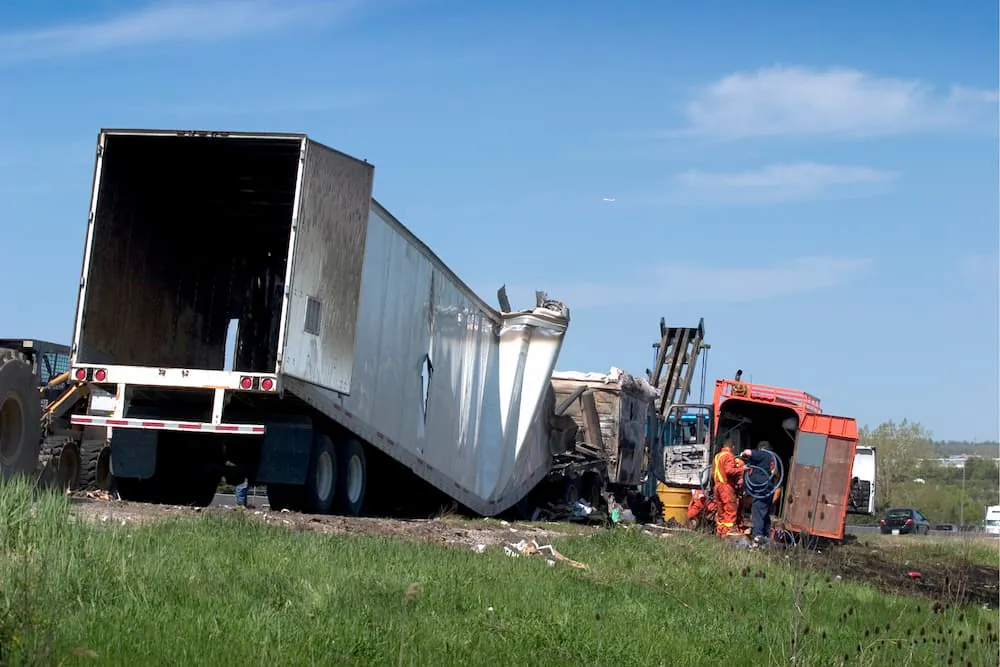
Liability can go further than the driver and the carrier. A truck’s cargo is sometimes loaded by a separate company, and a shifted or overloaded load can cause a rollover that has nothing to do with the driver’s skill. A part can fail because of a manufacturing defect. A leasing company or broker that put an unqualified driver behind the wheel can share responsibility too, and a 2026 Supreme Court ruling made that claim easier to bring.
Sorting out which parties actually caused the crash means investigating well past the police report, and that’s exactly the work an attorney does in an 18-wheeler accident case before any settlement talk starts.
What do FMCSA and Georgia trucking regulations mean for your claim?
Commercial trucks answer to a stack of federal and state rules built specifically for large vehicles and professional drivers, and breaking one of them can become direct evidence of negligence in your claim. The Federal Motor Carrier Safety Administration limits how many hours a driver can be on the road before resting, sets weight and load limits, and requires regular vehicle inspection and maintenance records. The Georgia Department of Public Safety and FMCSA both enforce these standards. Georgia has adopted much of that federal framework into state law. Trucking companies must follow strict safety regulations, including limits on driver hours and maintenance requirements. O.C.G.A. § 40-1-8
A driver who logged more hours than federal rules allow, or a company that skipped a required inspection, gives your attorney something concrete to point to, on top of any fine the trucking company faces. These federal and state trucking rules exist because a loaded semi is far more dangerous than a passenger car, and staying compliant is the baseline every trucking company owes everyone else on the road.
How is this different from a regular car accident claim?
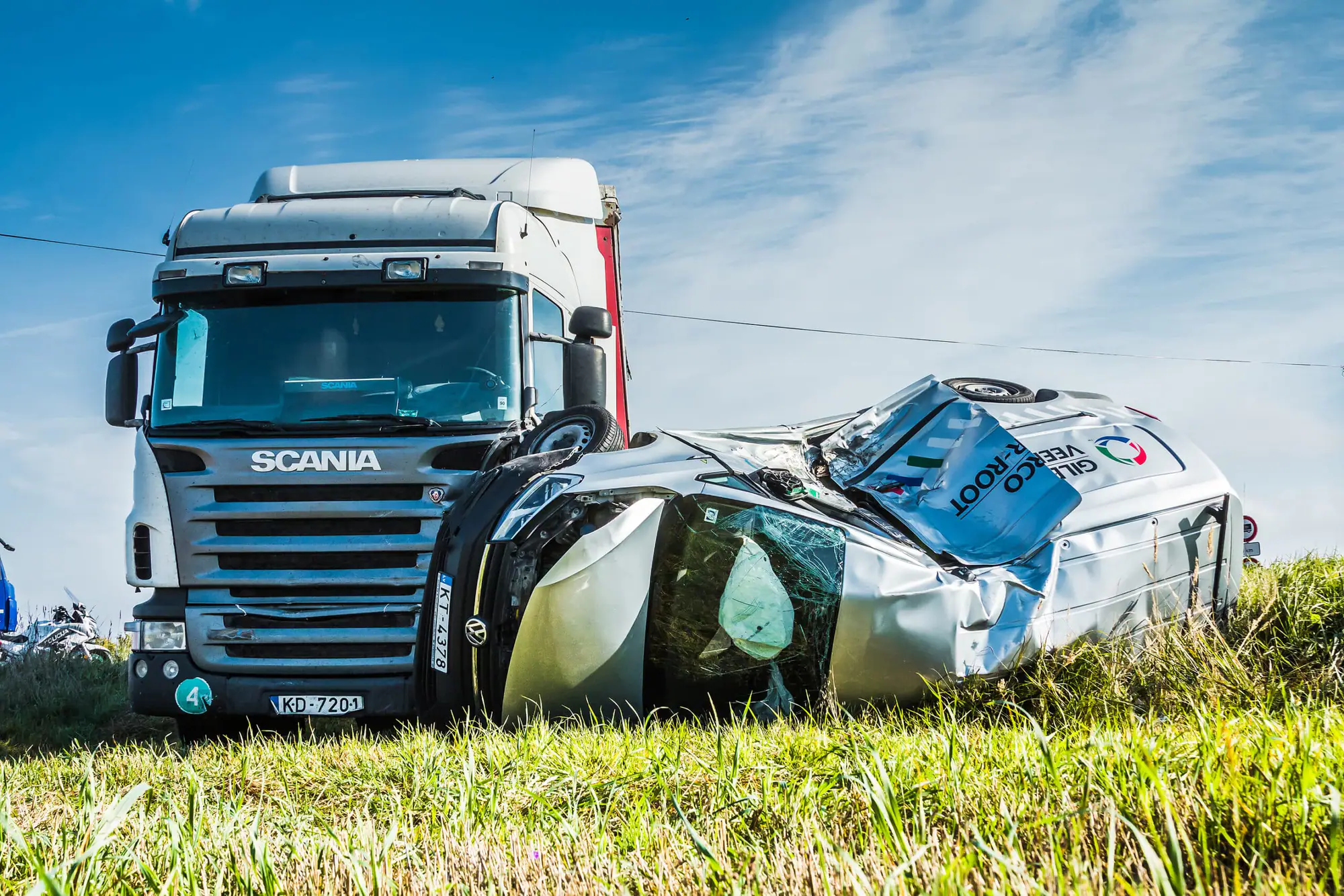
A car accident claim usually involves two drivers and two insurance policies. An 18-wheeler claim usually involves a driver, a trucking company, a cargo company, and sometimes a broker or a truck manufacturer, each with its own insurance and its own lawyers. A loaded tractor-trailer can weigh 20 times more than the car next to it, and the company running that truck usually has a legal team already working the file before you’ve left the scene. Commercial policies also carry much higher limits than a personal auto policy, which is part of why these companies contest claims so hard.
Evidence works differently too. Many trucks carry electronic logging devices and event data recorders, the trucking equivalent of an airplane’s black box, that capture speed, braking, and hours driven right up to the crash.
Trucking companies often must keep certain records for as little as six months under federal rules, and once that window closes, they can destroy them legally. Getting a preservation letter out fast is one of the first things an attorney does in a case like this, a step that’s unique to trucking claims.
What should you do after an 18-wheeler accident?
Call 911 and get the crash on record. Get checked out by a medical professional even if you feel fine, since adrenaline can mask an injury for hours or days. Get the truck’s license plate, the DOT number on the door, and the driver’s name if you’re able. Photograph the vehicles, the road, and the damage while it’s all still there.
Many trucking companies send a rapid response team to the scene within hours of a serious crash, and that team’s job is to protect the company’s interests. Before you say anything to a trucking company’s insurer or sign anything, talk to an attorney first.
How long do you have to file a claim in Georgia?
Victims generally have two years to file a personal injury lawsuit. O.C.G.A. § 9-3-33 That deadline applies whether the crash involved one truck or five, and it keeps running while you’re negotiating with an insurance company. It’s the same Georgia statute of limitations that applies to personal injury claims generally, trucking cases included, with no exceptions for how complicated a case turns out to be.
What compensation can you recover?
Georgia law allows recovery for economic damages like medical bills and lost income, along with non-economic damages like pain and suffering. In cases involving especially reckless conduct, such as a driver who was fatigued or impaired, punitive damages can apply too. Punitive damages are reserved for situations where the defendant's actions demonstrate willful misconduct, fraud, malice, or gross negligence. O.C.G.A. § 51-12-5.1 What a specific claim is worth comes down to the injury, the coverage available, and who’s ultimately liable.
Why work with a truck accident lawyer instead of going it alone?
A truck accident lawyer levels the playing field against a trucking company that already has more resources than you do. Trucking companies carry higher insurance limits than regular drivers, and they use that money to fund investigators, defense lawyers, and adjusters whose job is to limit what they pay out. A lawyer works the other side of that, preserving electronic logging and black box data before it’s erased, digging into the trucking company’s compliance record, and building the case around the regulations that are supposed to protect you. That’s exactly the kind of work that’s hard to do alone while you’re recovering from an injury, up against a team that does this full time.
Do you have a case?
Most solid 18-wheeler accident claims share a few things in common. The crash is still inside Georgia’s filing deadline, and you were physically hurt and received medical treatment. Your own share of the fault matters too. If you are less than 50% at fault, you can still recover damages, reduced by your percentage of fault. O.C.G.A. § 51-12-33 If that sounds like your situation, it’s worth a real conversation with an attorney before you accept anything from an insurance adjuster.
How can The Scott Pryor Law Group help after an 18-wheeler accident?
You focus on healing. We’ll handle the rest. If an 18-wheeler hit you anywhere in Georgia, including Atlanta, Augusta, or Gwinnett County, The Scott Pryor Law Group can look at what actually happened, who’s actually liable, and what your claim is actually worth. Scott Pryor is a Marine, and the Marine code comes down to one thing: no one goes it alone. Schedule a free consultation. You don’t pay unless we win your case.
Hurt in a truck or commercial vehicle crash in Georgia? The consultation is free. You don't pay unless we win your case.
Free Case Review or call (404) 474-7122